Skip to content

HR Newsletter

Winter 2026 Edition

Posted on: January 28, 2026                                                                                                  

Minimum Wages & Compliance Changes

A worker sits at their desk counting money.

Below is a summary of wage increases and compliance requirements that took effect recently or will take effect soon.


TABLE OF CONTENTS


Minimum hourly wage increases

State

Local jurisdiction

Compliance updates

Federal

State and local updates

Minimum hourly wage increases

The minimum wages and effective dates below are not exhaustive. There may be additional state and local jurisdictions that have scheduled increases or additional employees (EEs) that are impacted. 
 
Check the government sites that apply to your jurisdiction over the upcoming months to help ensure compliance with changing minimum wage rates and their effective dates. 

State minimum hourly wage increases

JANUARY 1, 2026

ARIZONA

$15.15

CALIFORNIA

$16.90

COLORADO

$15.16

CONNECTICUT

$16.94

HAWAII

$16.00

MAINE

$15.10

MICHIGAN

$13.73

MINNESOTA

$11.41

MISSOURI

$15.00

MONTANA

$10.85

NEBRASKA

$15.00

NEW JERSEY

$15.92
 $15.23 (seasonal employers and employers with fewer than six employees)

NEW YORK

$17.00 
(New York City, Long Island and Westchester County)
 
$16.00 
(rest of the state)

OHIO

$11.00

RHODE ISLAND

$16.00

SOUTH DAKOTA

$11.85

VERMONT

$14.42

 VIRGINIA

$12.77

WASHINGTON

$17.13


Local hourly wage increases

JANUARY 1, 2026

FLAGSTAFF, ARIZONA

$18.35

TUCSON, ARIZONA

$15.45

BELMONT, CALIFORNIA

$18.95

BURLINGAME, CALIFORNIA

$17.86

CUPERTINO, CALIFORNIA

$18.70

DALY CITY, CALIFORNIA

$17.50

EAST PALO ALTO, CALIFORNIA

$17.90

EL CERRITO, CALIFORNIA

$18.82

FOSTER CITY, CALIFORNIA

$17.85

HALF MOON BAY, CALIFORNIA

$17.91

HAYWARD, CALIFORNIA

$17.79
 (26 or more employees)
$16.90
 (25 or less employees)

LOS ALTOS, CALIFORNIA 

$18.70

MENLO PARK, CALIFORNIA 

$17.55

MOUNTAIN VIEW, CALIFORNIA     

$19.70

NOVATO, CALIFORNIA

$17.73
 (100 or more employees)
$17.46
(26 to 99 employees)
$16.90
 (25 or fewer employees)

OAKLAND, CALIFORNIA

$17.34
$18.85
(Hotel workers with health benefits)
$25.14
 (Hotel workers without health benefits)

PALO ALTO, CALIFORNIA

$18.70

PETALUMA, CALIFORNIA

$18.31

REDWOOD CITY, CALIFORNIA

$18.65

RICHMOND, CALIFORNIA

$19.18
 (Employer pays less than $1.50 per hour toward medical benefits)
$17.68
(Employer pays at least $1.50 per hour toward medical benefits)

SAN CARLOS, CALIFORNIA

$17.75

SAN DIEGO, CALIFORNIA

$17.75

SAN JOSE, CALIFORNIA

$18.45

SAN MATEO, CALIFORNIA

$18.60

SAN MATEO COUNTY, CALIFORNIA

(unincorporated areas only)

$17.95

SANTA CLARA, CALIFORNIA

$18.70

SANTA ROSA, CALIFORNIA

$18.21

SONOMA, CALIFORNIA

$18.47
 (26 or more employees) 
$17.38
 (25 or fewer employees)

SOUTH SAN FRANCISCO, CALIFORNIA

$18.15

SUNNYVALE, CALIFORNIA

$19.50

WEST HOLLYWOOD, CALIFORNIA

(non-hotel employees)

$20.25

BOULDER COUNTY, COLORADO

(unincorporated areas only)

$16.82

BOULDER CITY, COLORADO

$16.82

DENVER, COLORADO

$19.29

EDGEWATER, COLORADO

$18.17

PORTLAND, MAINE

$16.75

$8.38 (service employees)

ROCKLAND, MAINE

$16.00

HOWARD COUNTY, MARYLAND

$15.50
 (fewer than 15 employees)

MINNEAPOLIS, MINNESOTA

 $16.37

ST. PAUL, MINNESOTA

$16.37
(101 or more employees)

LAS CRUCES, NEW MEXICO

$13.01

BELLINGHAM, WASHINGTON

$19.13

EVERETT, WASHINGTON

$18.77
(15-499 employees; or annual gross revenue of over $2 million in Everett)                             

KING COUNTY, WASHINGTON

(unincorporated areas only)

$19.82
(16-499 employees)  
$19.82
(15 or fewer employees and annual gross revenue of $2 million or greater) 
$18.32 
(15 or fewer employees and an annual gross revenue of less than $2 million) 

RENTON, WASHINGTON

$20.57 
 (15 to 500 employees worldwide)
$20.57 
  (1-14 employees with over $2 million in annual gross revenue in Renton)

SEATTLE, WASHINGTON

$21.30

SEATAC, WASHINGTON

$20.74 
(Hospitality and transportation employees) 

TUKWILA, WASHINGTON

$21.65

Return to the top


Compliance updates

The compliance updates and their effective dates below are not exhaustive. There may be other state and local jurisdictions that have additional laws and regulations. Check the government sites that apply to your jurisdiction over the upcoming months to help ensure compliance with changing laws. 


Federal


Federal_states

JANUARY 1, 2026

IRS releases 2026 mileage rates. The Internal Revenue Service has announced the 2026 standard mileage rates used to calculate the deductible costs of operating an automobile for business, moving, and charitable purpose and for the use of an automobile to obtain medical care.


State and local updates


CALIFORNIA

CA_red

JANUARY 1, 2026

California revises definition of 'pay scale' for disclosure requirement. California has revised the definition of “pay scale” under the state’s requirement to disclose compensation information to applicants and employees.

California expands CalWARN requirement. California requires CalWARN Act notices to indicate whether the employer plans to coordinate services through the local workforce development board, through a different entity, or not at all. 

California expands employee access to personnel records. California has expanded the scope of records that employees have the right to access in their personnel file.

California explains reimbursement requirements. California clarified that the duty of an employer to reimburse their employees for business expenses also applies to the use of a vehicle owned by an employee and used by that employee in the discharge of their duties.

California raises minimum pay for overtime exemptions for 2026. The California Department of Industrial Relations announced an increase in the pay rates that computer software employees, physicians and Administrative, Professional, and Executive Employees must receive in order to be exempt from overtime pay.

California amends pay data reporting rules. California requires that any employee demographic information gathered by a covered employer or labor contractor for the purpose of pay data reporting to the state be kept separately from the employee’s personnel records. 

FEBRUARY 1, 2026

California requires employers to provide new annual notice. California requires employers to provide a new stand-alone written notice annually to each employee and to each new employee at the time of hire, informing them of their rights under state and federal law.

MARCH 30, 2026

California requires employers to offer the opportunity to name an emergency contact. By March 30, 2026, or the date of hire (whichever is later), California employers must provide each employee the opportunity to name an emergency contact for situations where they are arrested or detained at the worksite, during work hours or while otherwise performing job duties. 


COLORADO

Colorado

JANUARY 1, 2026

Colorado amends paid family leave program. Colorado will extend the maximum duration of paid family and medical leave for a parent with a child receiving inpatient care in a neonatal intensive care unit. 


CONNECTICUT

CT

JANUARY 1, 2026

Connecticut expands paid sick leave law. Employers with 11 or more employees must provide paid sick leave to employees.


DELAWARE

Delaware

DECEMBER 11, 2025

Delaware amends regulations for paid family and medical leave. Delaware has amended regulations implementing the state’s Paid Family and Medical Leave Program. The program begins providing paid leave benefits to individuals beginning January 1, 2026. 


ILLINOIS

 Illinois

DECEMBER 12, 2025

Illinois adds new worker protections. Illinois prohibits an employer from taking adverse action against an employee based on information they receive from government agencies that aren’t responsible for enforcing immigration law. 

JANUARY 1, 2026

Illinois establishes guardrails against discrimination from AI. Illinois prohibits employers from using AI for employment purposes if it has the effect of subjecting employees to discrimination on the basis of protected classes, such as race, under state law or to use ZIP codes as a proxy for protected classes under state law. 

Illinois clarifies pay rules for breaks for nursing mothers. Illinois employers will be required to pay employees at their regular rate of pay during breaks taken under the state’s Nursing Mothers in the Workplace Act.

Illinois amends blood and organ donation leave law. Part-time employees will be entitled to paid organ donation leave under the Illinois Employee Blood and Organ Donation Leave Act.

Illinois protects certain use of employer-provided equipment. Illinois prohibits employers from taking adverse action against an employee for using employer-issued equipment to record crimes involving violence against the employee or their family or household member.


MAINE

ME_red

JANUARY 1, 2026

Maine expands minimum wage and overtime requirements to agricultural workers. Maine agricultural employees must be paid the minimum wage and overtime for all hours worked over 50 in a week.


MICHIGAN

MI_red

JANUARY 1, 2026

Michigan adjusts tip credit. The minimum cash wage for tipped employees increased to $5.49 per hour.


MINNESOTA

Minnesota

DECEMBER 1, 2025

Minnesota requires paid family leave and medical leave notice. Employers must issue a notice to each employee no more than 30 days from the beginning date of the employee's employment, or by December 1, 2025 (whichever is later) and obtain a written or electronic acknowledgment of receipt of the information, or a signed statement indicating the employee's refusal to sign such acknowledgment.

JANUARY 1, 2026

Minnesota expands break and meal period requirements. Minnesota expands rest break and meal period requirements and increases penalties for employers that are found to have violated the law.

Minnesota clarifies and amends paid sick leave law. A Minnesota employer may advance an employee's paid sick leave based on the number of hours the employer anticipates the employee will work for the remainder of the accrual year.

Minnesota launches paid family and medical leave program. Effective January 1, 2026, contributions to the program and wage benefits begin. Additionally, Minnesota employees may begin using paid family and medical leave.


NEVADA

NV_red

 JANUARY 1, 2026

Nevada strengthens protections against wildfire smoke exposure. Nevada has strengthened protections for employees who work outdoors from the hazards associated with exposure to wildfire smoke (hazards not specifically addressed by federal Occupational Safety and Health Administration regulations).


NEW HAMPSHIRE

New Hampshire

JANUARY 1, 2026

New Hampshire requires childbirth-related leave.
New Hampshire will require certain employers to provide unpaid leave for medical appointments related to childbirth or adoption.

New Hampshire adds employee protections for military spouses. New Hampshire employers with 50 or more employees must allow employees with a military spouse who is involuntarily mobilized to take an unpaid, job-protected leave of absence. 


NEW JERSEY

New Jersey

DECEMBER 2, 2025

New Jersey clarifies mandatory meetings ban for political and religious matters. New Jersey will expand prohibitions on employers requiring employees to attend meetings or listen to communications related to political or religious matters.

DECEMBER 15, 2025

New Jersey codifies prohibitions against disparate impact discrimination. New Jersey has adopted rules that codify existing law prohibiting disparate impact discrimination.


NEW YORK

NY_red


DECEMBER 19, 2025

New York enacts Trapped at Work Act. New York prohibits promissory notes requiring an employee to repay training expenses if they leave their employment before the note period expires. 

JANUARY 26, 2026

New York City adds minimum pay requirements for app-based grocery delivery drivers. New York City has enacted several bills that provide new protections to app-based grocery delivery workers.

FEBRUARY 22, 2026

New York City expands Earned Safe and Sick Time Act. New York City has expanded its Earned Safe and Sick Time Act to provide additional unpaid leave and expand the reasons an employee may use the leave. The city has also formally added paid prenatal leave requirements into local law 

New York City reduces temporary schedule change obligations. New York City employers are no longer required to approve temporary schedule changes ( they can approve, deny, or propose an alternative to such a request), and they must respond to an employee’s request as soon as practical.


OREGON

Oregon

JANUARY 1, 2026

Oregon enacts employee overpayment legislation. Oregon has provided specific guidance to employers regarding the collection of wage overpayments from employees.

Oregon expands paid sick leave to include blood donation. Oregon has expanded the reasons an employee may take paid sick leave.

Oregon enacts new hire notice requirements. Oregon employers will be required to provide, at the time of hire, a written explanation of certain earnings and deductions on itemized pay statements.

Oregon adds workplace violence prevention requirements. Oregon health-care employers must revise their workplace violence prevention programs to include procedures for conducting investigations and implementing post-incident response strategies and provide workplace violence prevention and protection training to employees and contracted security personnel on an annual basis.


PENNSYLVNIA

PA_red

JANUARY 1, 2026

Pennsylvania requires veterans benefits and services poster. Pennsylvania will require employers with more than 50 full-time employees to post a veterans’ benefits and services poster that will be created by the Pennsylvania Department of Labor and Industry. 

Pittsburgh expands paid sick leave requirements. The city of Pittsburgh has expanded requirements under its paid sick leave, impacting areas such as accrual, use and carryover. 

JANUARY 6, 2026

Philadelphia expands employer background screening requirements. The City of Philadelphia has passed an ordinance that clarifies and amends provisions under the Fair Criminal Record Screening Standards Ordinance. 

JANUARY 24, 2026

Philadelphia strengthens hairstyle non-discrimination protections. Philadelphia employers may not discriminate based on hair texture and protective hairstyles, including locs, braids, twists, coils, Bantu knots, afros and extensions, head coverings and hairstyles historically associated with religious creeds.


RHODE ISLAND

RI_red icon

JANUARY 1, 2026

Rhode Island adds new hire notice requirement. Rhode Island employers will be required to provide all new hire employees a written notice, in English, with certain wage information.

Rhode Island adds protections for certain donors. Rhode Island adds employment protections for bone marrow transplant and living organ donors. 

Rhode Island expands family leave. The amount of leave employees are entitled to under the Rhode Island Temporary Caregiver Insurance law increased to eight weeks.

Rhode Island expands Temporary Caregiver and Disability Insurance benefits. Rhode Island has expanded the definition of a covered family member under the Temporary Caregiver Insurance leave law and increased the taxable wage base for Temporary Disability Insurance.  


Rhode Island adds human trafficking prevention training requirements.  Rhode Island requires all hotel employees and every operator of a short-term rental property in Rhode Island to receive human trafficking awareness training.


TEXAS

TX 

JANUARY 1, 2026

Texas adds law governing AI use. Texas has enacted legislation which, among other things, prohibits the development or deployment of an artificial intelligence system with the intent to unlawfully discriminate against a protected class. 


WASHINGTON

WA_red


JANUARY 1, 2026

Washington expands paid family leave act. The state has expanded a handful of protections under the Washington Paid Family Leave Act. 

Washington increases safety standards for isolated employees. Certain Washington employers will have additional workplace safety requirements for isolated employees. 

Washington adds leave for victims of a hate crime. The state will require employers to provide safety accommodations and unpaid leave when an employee or their family member is a victim of a hate crime

Washington state modifies hospital workers meal and rest break requirements. Washington will require modified meal and rest break requirements for hospital workers.

Washington increases Paid Family Leave premiums. The total paid family leave premium rate rose to 1.13 % of each employee’s gross wages, with employers contributing 28.57% of the total premium. Certain businesses with fewer than 50 employees for the 2025 calendar year are not required to pay the employer portion of the premium, but they must still collect the employee premium or pay employees’ premiums on their behalf.

Washington enhances job protections. Washington has enhanced job protection for employees taking Paid Leave from employers with 25 or more employees.

Washington clarifies health care benefits. Washington has clarified when employers must maintain health care benefits for employees taking job-protected Paid Leave.

Washington clarifies Paid Leave and FMLA concurrence. Washington has provided information to help employers manage job protection when an employee is eligible for both Paid Leave and FMLA.

Washington reduces weekly claim minimums. Washington has reduced the minimum amount of time an employee must miss in a week to be eligible for Paid Leave from 8 hours to 4 hours.

Washington expands small business assistance grants. Washington has expanded its Paid Leave grant program to help small employers with costs related to employees on leave.

Return to the top


In this issue:

Man and woman in conference room reviewing document
A worker with a clipboard
Young business woman reviewing pay data trends

Related content:

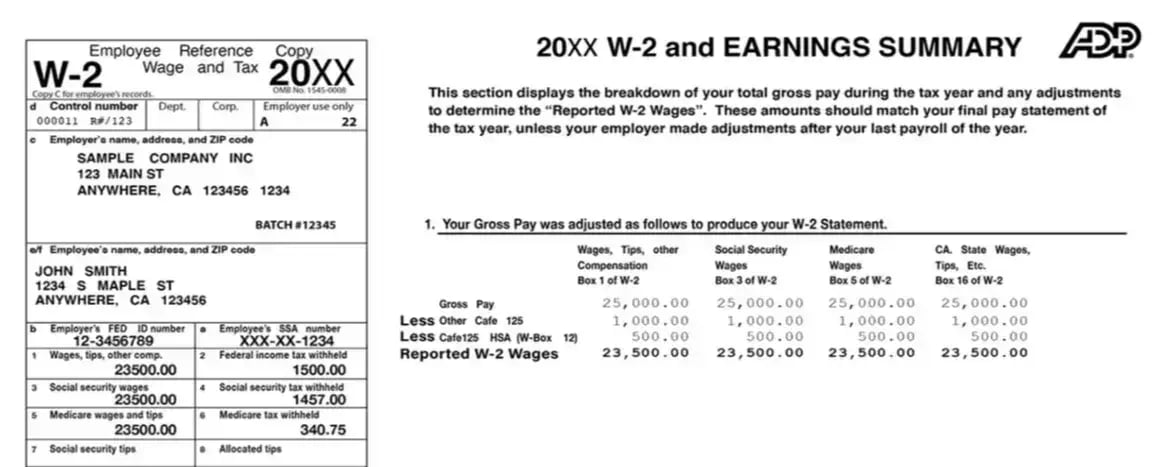
Know Your Form W-2
Two women smiling, looking at computer screen